The Story Behind Ojochal's Food Scene: How a Rainforest Village Became Costa Rica's Culinary Capital
Most great food destinations have an obvious explanation. A port city built on trade. A capital with centuries of royal kitchens. A wine region shaped by geology and climate. They make sense on a map.
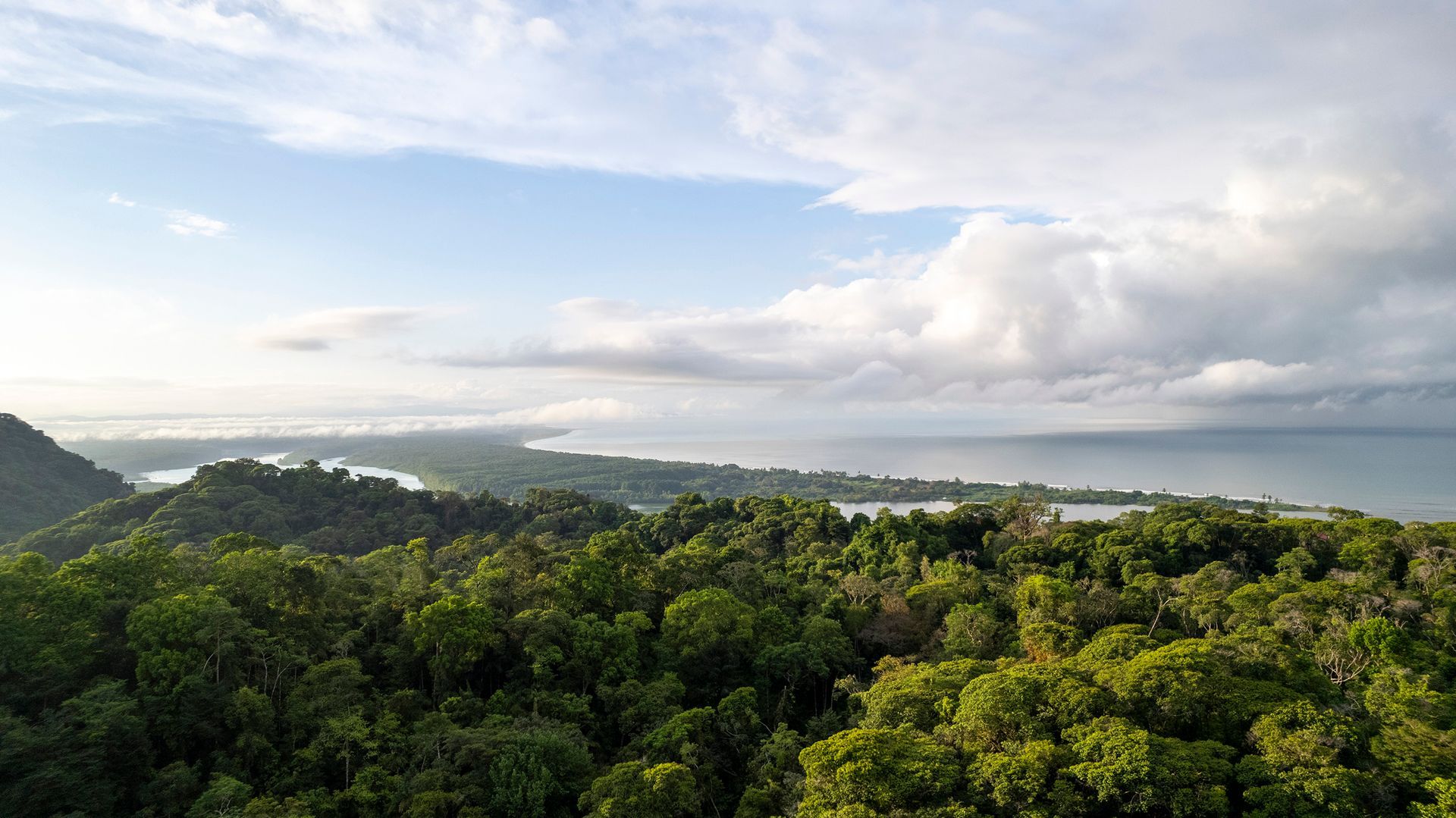
Ojochal makes no sense at all — and that's exactly what makes it so extraordinary.
Ojochal has a larger percentage of foreign residents than nearly any other town in Costa Rica, and as of early 2026, the village of roughly 4,000 people has 26 listed restaurants — a ratio of one restaurant for every 154 people that would be remarkable in a town built around tourism. The crucial detail: Ojochal was never built around tourism at all.
This is the story of how a small rainforest village on Costa Rica's southern Pacific coast became one of the most surprising culinary destinations in all of Central America — and why Hotel Three Sixty sits at the center of the best way to experience it.
It Started With a Group of Quebecois and 1,000 Hectares of Jungle
The origin story of Ojochal's food scene begins not in a kitchen, but in a real estate deal.
When a small group of French Canadians from Quebec arrived in this region in the early 1980s, local families were subsisting on agriculture and most of the area was pasture land. This group of around ten investors purchased about 1,000 hectares to begin — from the coast up to where the church and the Rio Tortuga bridge now stand.
Ojochal, historically a Tico farming community, began attracting expats drawn by the proximity to the ocean, the largely untouched jungle, and the jaw-dropping natural beauty of the Costa Ballena coast. As the French-Canadian community grew and put down roots, something natural happened: they started cooking. Then they started cooking for each other. Then they opened restaurants.
French and Canadian expats began arriving through the 1990s and 2000s, and instead of building surf shops, they opened restaurants. The result was a cluster of gourmet dining options within a few kilometers that collectively punch well above what any town of this size should be able to deliver.
The Secret Ingredient: Cooking for Your Neighbors
Here is what makes Ojochal's food scene fundamentally different from every other restaurant cluster in Costa Rica — and it has nothing to do with ingredients or technique.
If you own a restaurant in a non-tourist town and your food is not good or overpriced, you will quickly go out of business. The people eating at these tables on a Wednesday night are the same people who will be at the farmers market on Saturday and at the next table over at the next restaurant the following week. There is no forgiving stream of one-time visitors to absorb a bad meal.
This is peer accountability with a menu. In Cancún or Manuel Antonio, a mediocre restaurant can survive for years on the steady rotation of first-time tourists who don't know better. In Ojochal, word travels fast, standards stay high, and only the restaurants that genuinely earn their reputation survive. The result is a level of consistency that most tourist destinations never achieve.
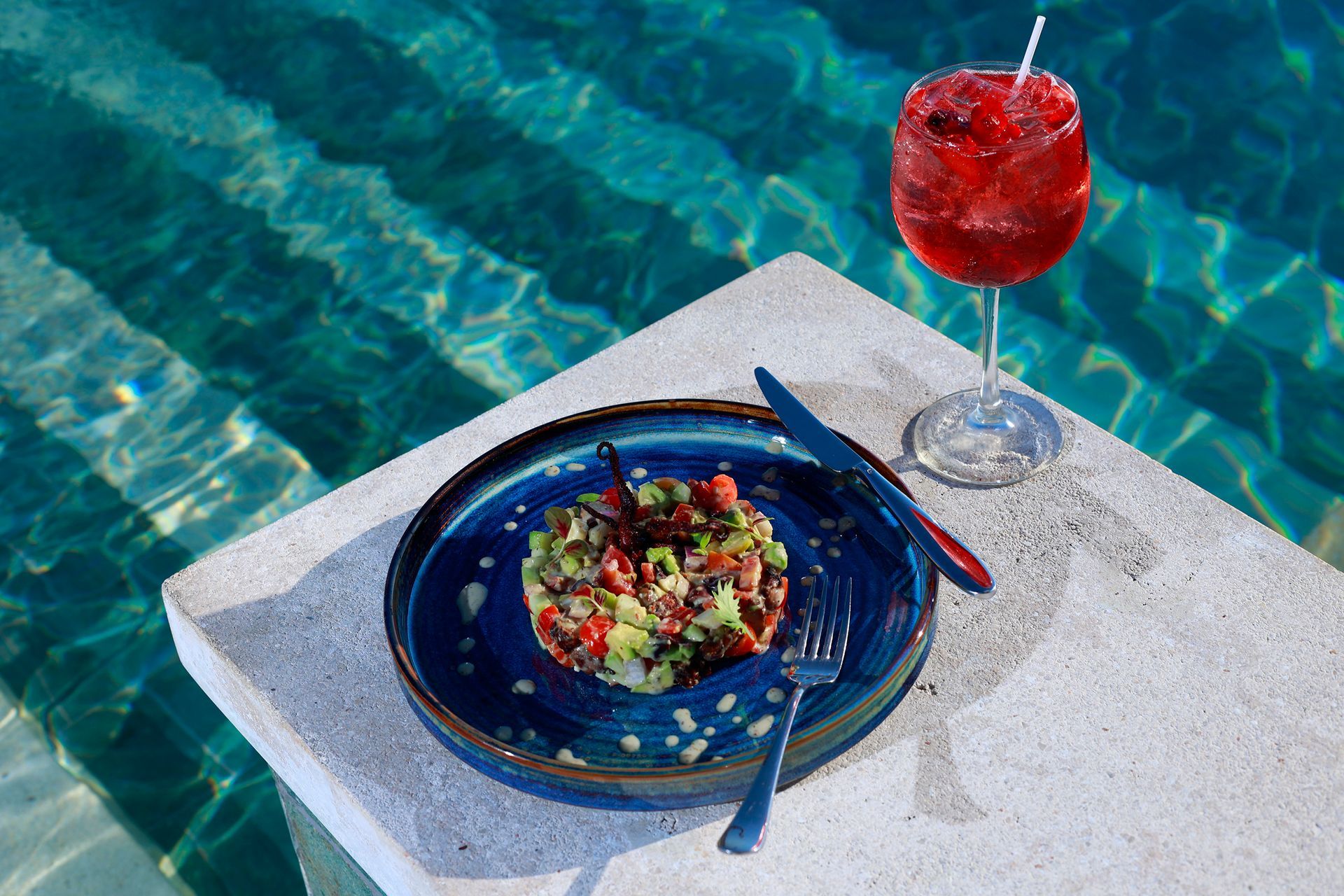
When expats open restaurants in Ojochal, they tend to cook what they grew up eating. The cuisine map of this village traces the biography of its residents more than any planning document. There's a large US, Canadian and French contingent, but you can also find residents from every continent — and the restaurant scene reflects exactly that, with French, Indonesian, Thai, Tico, Italian, Mexican, Vietnamese, and world cuisine all represented within a few kilometers of each other.
The Moment It Became Official: El Sabor de Ojochal
By the early 2010s, what had started as a community of expats cooking for their neighbors had become something the village's own restaurant owners recognized as genuinely special.
In 2012, the owners of Citrus, Ylang Ylang, and Azul formed an association called "El Sabor de Ojochal" — The Flavor of Ojochal — with the explicit goal of branding Ojochal as a Costa Rica culinary mecca and featuring regular events throughout the year.
The association's first major event, the Great Culinary Festival on January 26, 2013, drew hundreds of food lovers to enjoy dishes from Ojochal's finest restaurants, live music, and wine — with participants including Azul, Citrus, Ylang Ylang, Exotica, Pancito Café, Mama E Papa, Le Bistro, Coco Lindo, Villas Gaia, Diquis del Sur, and El Fuego.
It was, in many ways, the moment Ojochal stopped being a hidden secret and started being a destination. Food lovers from across Costa Rica and beyond made the trip specifically for the festival — and many stayed to explore the village, the beaches, and the surrounding rainforest.
The Scene Today: World-Class and Still Growing
More than a decade after that first culinary festival, Ojochal's food scene has only deepened and diversified.
Restaurante Exótica — open since 1998 and consistently described as one of the finest restaurants in all of Costa Rica — serves French cuisine with tropical accents on an intimate open-air patio, with a menu that includes Tahitian fish carpaccio bathed in creamy banana and coconut marinade, fish or shrimp in banana-curry sauce, and spicy Vietnamese chicken soup alongside classic French preparations like cognac liver pâté and duck breast with orange sauce.
Citrus brings global technique to local ingredients, blending French, Middle Eastern, and Asian influences in a refined garden setting. Azul at El Castillo pairs Mediterranean fine dining with some of the most sweeping Pacific Ocean views on the coast. Heliconia's organic-first approach and beautifully plated dishes have made it a rising favorite among both locals and new visitors.
The full cuisine range — French, Indonesian, Thai, Vietnamese, Italian, Polynesian, Japanese fusion, Tico, Mediterranean — is not the product of deliberate curation. It emerged organically from who moved here and what they knew how to cook. That accidental authenticity is impossible to manufacture, and it's precisely what food lovers who make the trip to Ojochal find so disarming.

Where Hotel Three Sixty Fits Into the Story
Hotel Three Sixty didn't arrive in Ojochal despite its food scene — it arrived because of it.
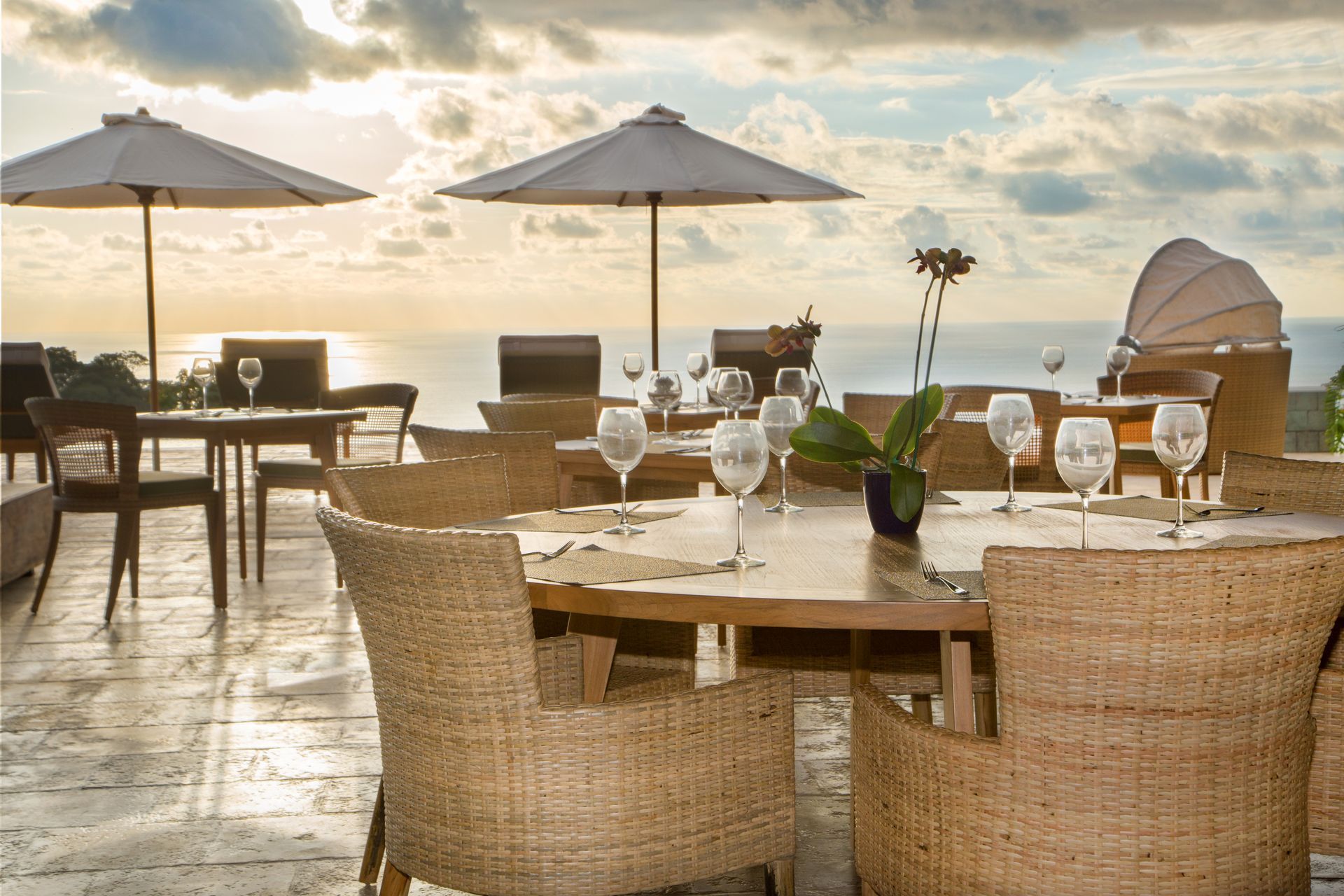
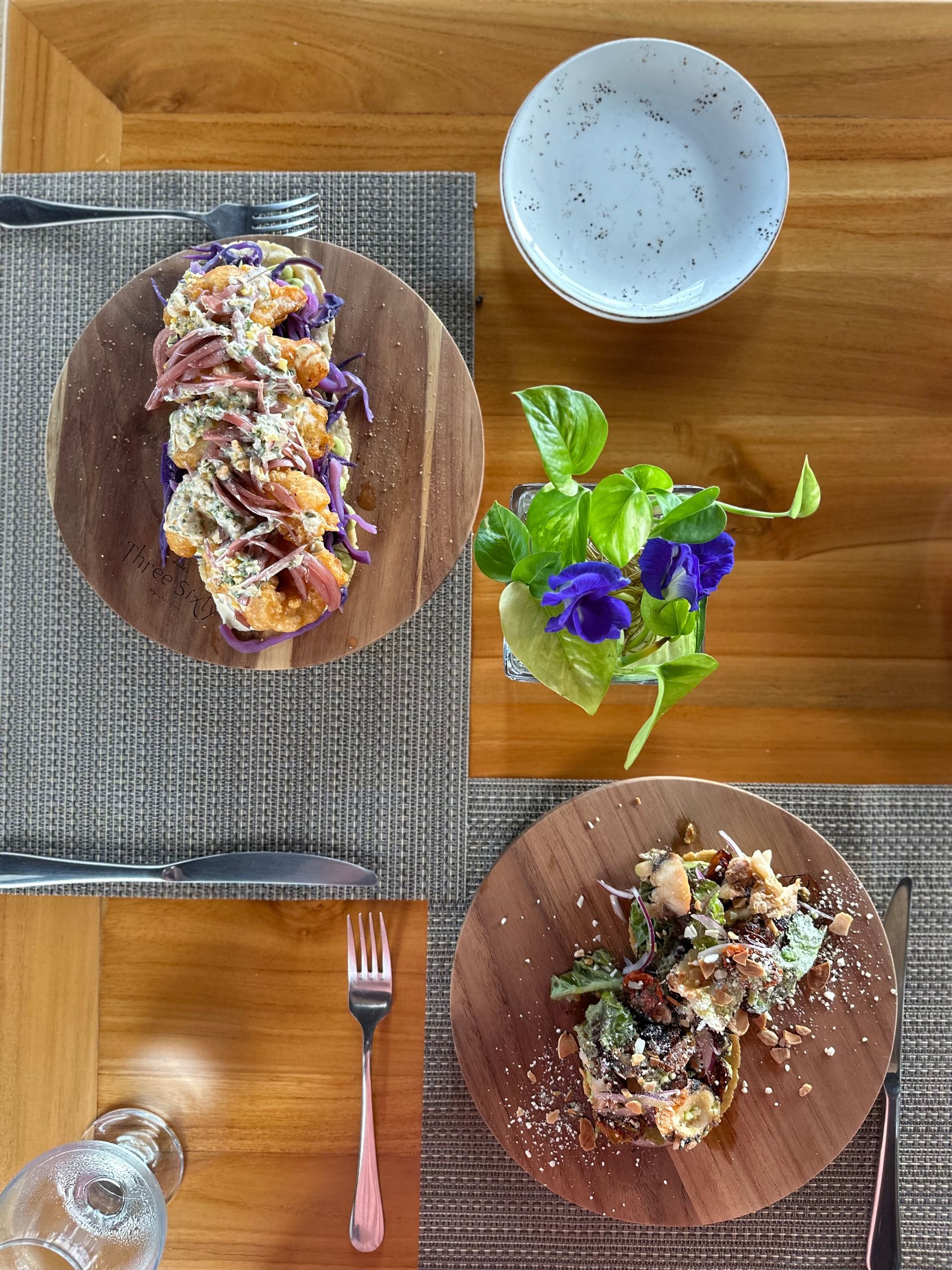
The hotel was built on the understanding that Ojochal offers something no amount of marketing can fabricate: a genuine community with deep roots, extraordinary natural surroundings, and a culinary culture that has been earned over decades rather than constructed for tourists. The property's own Kua Kua Restaurant carries that same ethos — seasonal menus, local sourcing, creative execution — perched nearly 1,000 feet above sea level with panoramic Pacific views that make every meal feel like an occasion.
For guests staying at Hotel Three Sixty, the entire arc of Ojochal's food story is right at your doorstep. Exótica's candlelit jungle terrace is a short drive away. So is Citrus, Azul, Heliconia, and every other chapter of a culinary scene that started with a group of Quebecois investors who fell in love with the rainforest and never quite left.
The concierge team at Hotel Three Sixty can arrange reservations, recommend the right restaurant for the right evening, and make sure your time in Ojochal's dining scene is as intentional and memorable as the rest of your stay. Because here, dinner isn't an afterthought — it's part of why you came.